

MAIN: The WWI Causation Acronym That Actually Works (With A Warning)
This is a free post from my Substack. Please visit and consider subscribing if you’d like more content like this.
Multiple major powers, a tangle of alliances, a decades-long arms race, colonial rivalries across three continents, and an assassination that somehow ignites all of it simultaneously. Where to begin?
When students first encounter World War I, the sheer number of moving parts is overwhelming. Six major powers, a tangle of alliances, a decades-long arms race, colonial rivalries across three continents, and an assassination that somehow ignites all of it simultaneously. Before you can analyze any of that, you need a way to organize it.
That’s what the acronym MAIN is for. And, no, “A” does not stand for “assassination!” Unfortunately, any attempt to simplify WWI to one (or even just four) causes will fail! Read ahead to find out why.
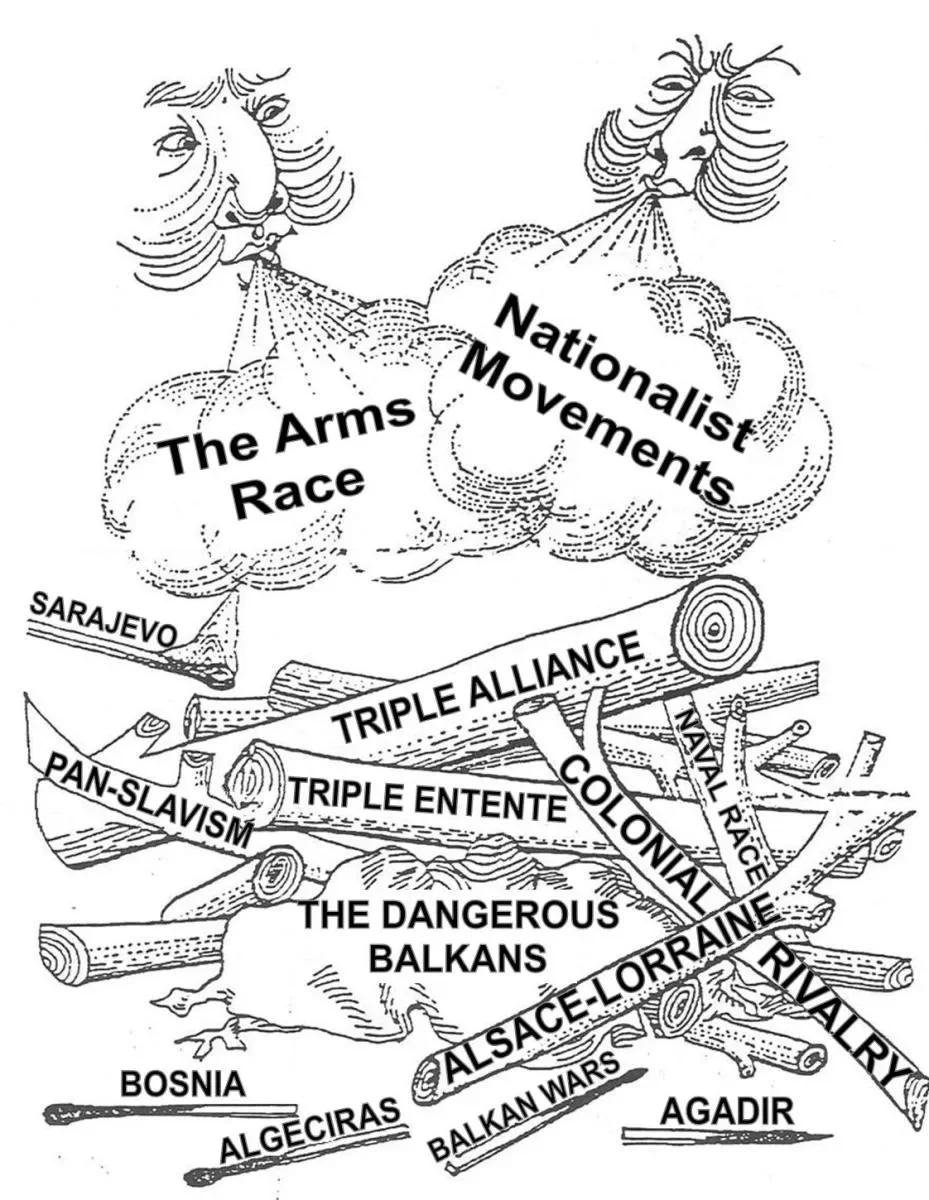
What does MAIN stand for and how does it help?
Militarism,
Alliances,
Imperialism, and
Nationalism
Each one captures something real and important about why Europe was sitting on a powder keg by 1914.
Militarism: explains why the war was so total once it started.
European powers had spent decades building massive standing armies, developing new weapons technology, and drafting elaborate war plans. Germany’s military budget roughly doubled between 1900 and 1914. Britain and Germany were locked in a naval arms race that poisoned their diplomatic relationship for years before a single shot was fired. When war came, these countries didn’t stumble into a limited conflict — they unleashed everything they had spent decades building.
Alliances: explains why a regional dispute became a world war.
The Triple Alliance and the Triple Entente meant that a conflict between Austria-Hungary and Serbia couldn’t stay contained. When Austria-Hungary declared war on Serbia, Russia mobilized to defend its Slavic neighbors, which triggered German mobilization, which brought in France, which brought in Britain when Germany invaded Belgium. The alliance system turned a Balkan crisis into a continental catastrophe in a matter of weeks.
Imperialism: explains the broader context of European rivalry.
By 1914 the major powers had been competing for colonies, resources, and global influence for decades, and that competition had already produced near-disasters — France and Germany almost came to blows over Morocco in 1905 and again in 1911. Imperialism created a climate of suspicion between powers that made cooperation during the 1914 crisis much harder than it might have been.
Nationalism: is probably the richest of the four and works on more than one level.
Governments cultivated nationalist sentiment to build popular support for military spending and aggressive foreign policy. At the same time, ethnic minorities across Europe — particularly Slavic peoples in the Balkans — were pushing for self-determination from the multinational empires that ruled them. It was this second kind of nationalism, the kind brewing in Bosnia and Serbia, that produced the assassination of Franz Ferdinand and gave Austria-Hungary the crisis it had been dreading for years.
Put all four together and you have a continent that is heavily armed, divided into rival blocs, competing bitterly for global power, and internally destabilized by ethnic nationalism.
Where It Gets Complicated (and MAIN isn’t Quite Enough)
MAIN organizes the causes, but it doesn’t explain how they connected to produce a war at this particular moment rather than in 1905 or 1911, both just a few of the other times when Europe also came close to all-out war. The reason 1914 was different is that all four forces converged on the same crisis at the same time in rapid succession.
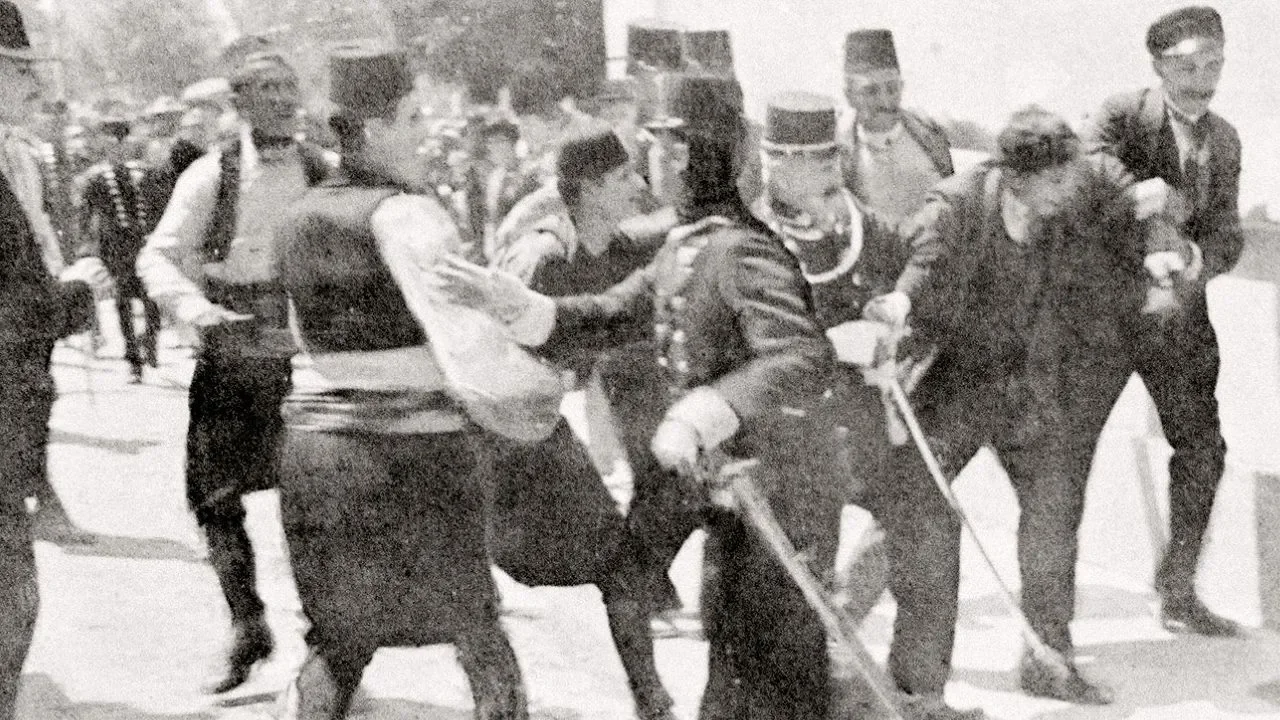
Austria-Hungary was a multiethnic empire on a slow decline watching nationalist movements eat away at its internal cohesion, and it had been looking for an opportunity to crush Serbian power before that process went any further. The assassination of Franz Ferdinand by the Black Hand just gave Vienna a justification to act on those desires. Russia, meanwhile, had its own reasons for defending Serbian independence, partly strategic and partly tied to its identity as the protector of Slavic peoples. Neither power was simply reacting to the assassination. Both were pursuing interests that predated it by years.
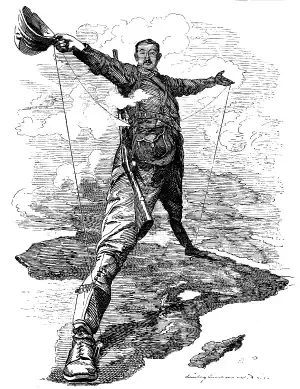
Those interests were shaped in large part by decades of imperial competition. European powers had been massively expanding their military capabilities in order to protect empires, control trade routes, and project power across multiple continents. That competition had already produced serious crises and left the major powers deeply suspicious of each other long before 1914. When Germany launched a naval program explicitly designed to challenge British supremacy at sea, Britain not only began frantically building up its navy again, it began viewing German intentions as fundamentally threatening in a way that colored every subsequent diplomatic interaction. Imperial rivalry had made the major powers into bad-faith negotiators before the crisis even started.
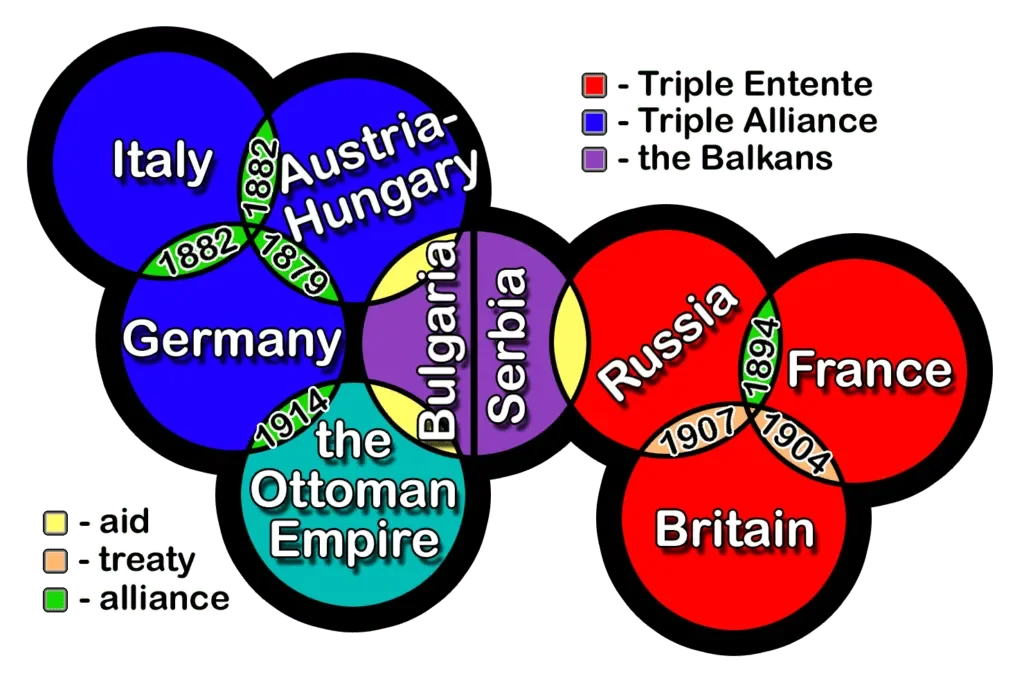
The alliance system then transformed a bilateral confrontation into a continental war, though not automatically. Germany issued Austria-Hungary the “blank check,” promising unconditional support and removing the last brake on Austrian aggression against the Balkan nationalists. Russia’s mobilization against Austria-Hungary in response forced Germany’s hand, not just because of treaty obligations but because German military planning had always assumed a two-front war and staked everything on fighting it under favorable conditions. Britain’s entry was the most contingent of all: what brought Britain in was Germany’s invasion of Belgium, which violated a neutrality treaty Britain had guaranteed since 1839 (!) and threatened British strategic interests in the Channel. The alliances created the architecture for escalation in an environment soaked in fear, pride, and calculation.
Militarism made those decisions nearly impossible to reverse. When Russia began rebuilding its military after the Russo-Japanese War, German planners concluded that by 1917 Russia would be strong enough that a two-front war would become unwinnable. This created pressure toward war sooner rather than later that was present in Berlin long before the assassination. By the time the crisis hit, each major power had half-convinced itself that war was probably coming anyway, which made acting aggressively feel safer than waiting. Once mobilization began the Schlieffen Plan took over: the Germans famously planned to strike west, knock out France in six weeks, then turn back east before Russia could fully mobilize. Any hesitation, Germany believed, would collapse the whole strategy.
By the time European leaders grasped the full scale of what was unfolding, the timetables had already made most of their choices for them. That’s what MAIN can’t show you on its own: not four separate causes, but four forces that had been winding around each other for decades until they became impossible to ignore.